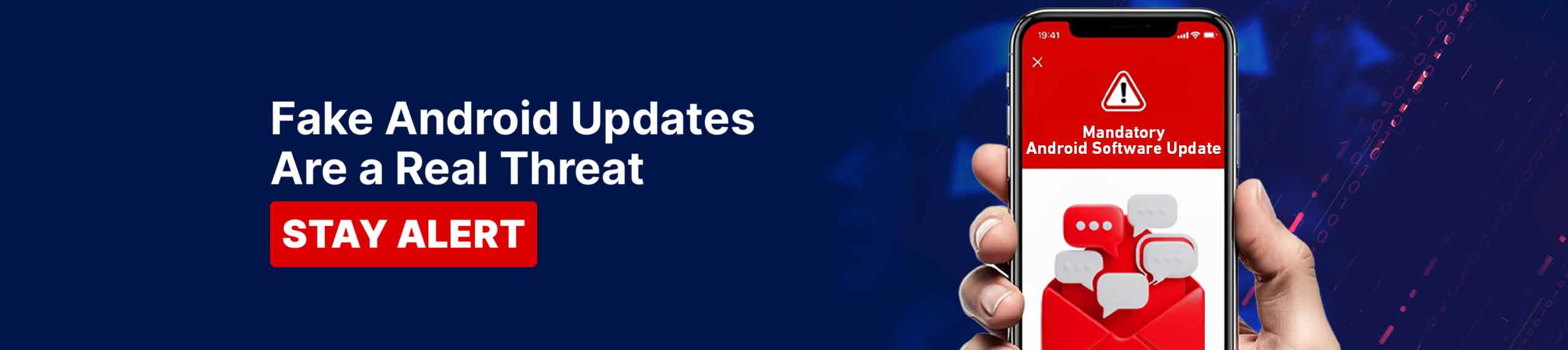
Fake Android App Updates & Malware When a “System Update” Is Actually a Scam

Android users are increasingly being targeted by malware disguised as system updates or app notifications. These attacks often appear as messages claiming a “Chrome update” or a “security fix” is required.

Once installed, the malware can secretly access your device, capture banking details, read messages, and initiate unauthorised transactions. The message may look official, but the risk is real.

How Fake Android Update Scams Work

Fraudsters use deceptive techniques to trick users into installing malicious apps. These scams may involve:

  • SMS messages claiming your device needs an urgent update.
  • Fake “System Update” or “Chrome Update” prompts.
  • Links directing you to apps outside the Google Play Store.
  • Apps requesting excessive permissions, such as accessibility access.

Once installed, the malware can monitor activity, intercept OTPs, and give fraudsters control over your device.


Common Android Malware Scenarios in the UAE

  • Fake Update Messages: You receive an SMS asking you to update Chrome or your Android system urgently.
  • Apps Installed Outside Google Play Store: You are redirected to download an app from an unfamiliar website.
  • OTP Interception and Unauthorised Transactions: Malware reads messages and interferes with banking activity without your knowledge.
  • Unusual Device Behaviour: Your phone becomes slower, apps open unexpectedly, or transactions occur that you did not authorise.


How to Protect Yourself

  • Install apps only from Google Play Store: Never download apps from links sent via SMS or messages.
  • Do not trust update links in messages: Legitimate Android and app updates happen only through your device settings or Google Play Store.
  • Never share OTPs, PINs, or passwords: Al Ansari Exchange will never ask for these details through messages, calls, or social media.
  • Enable biometric security: Use fingerprint or facial recognition to protect your apps.
  • Delete suspicious messages immediately: Do not click, respond, or forward them.

For updates and communication, rely only on Al Ansari Exchange official social media accounts and official channels.


Final Reminder

If an update request feels unexpected or urgent, pause and verify before taking any action.

Staying cautious today can protect your money tomorrow.

Stay Alert. Stay Secure.

Loans vs. Credit: Make the Right Move

Whether it’s a loan for a big expense or credit for everyday purchases, understanding how borrowing works can protect you from debt traps and help you make smarter financial choices. Let’s break down the basics so you can borrow with confidence and control.

What Is a Loan?

📌 “A loan isn’t free money—it’s a financial commitment. Understand it before you sign.”

🏦 A loan is money borrowed from a bank, financial institution, or employer that you agree to repay over time, usually with added interest. Common types of loans include personal loans, auto loans, and salary advances.

What Is Credit?

📌 “Credit is your borrowing power—it builds your future or breaks it.”

💳 Credit is the ability to borrow money or access goods and services with the understanding that you’ll pay later. Your credit history affects your ability to get loans, rent a home, or even get certain jobs.

Loan vs. Credit: What’s the Difference?

📌 “Use loans for goals, credit for control—but manage both wisely.”

Before borrowing money, it’s important to understand whether a loan or credit is the right tool for your needs. Each serves a different purpose and comes with its own terms. Here’s a quick comparison to help you decide which suits your situation best:

Loan Credit
Definition Borrowed money repaid over time with interest. Borrowing power, you use and repay as needed.
Purpose Used for specific, often large expenses (e.g. car, education, emergency). Used for ongoing or smaller purchases (e.g. shopping, bills, subscriptions).
Form Fixed amount given upfront. Flexible amount up to a credit limit.
Repayment Set monthly instalments over a defined period. Varies—minimum monthly payments required.
Interest Starts immediately and is often fixed. Accrues only on used credit; rates may vary.
Examples Personal loan, auto loan, and salary advance. Credit card, line of credit, buy-now-pay-later.
Commitment Long-term, formal agreement with clear terms. Ongoing access with responsibility to manage wisely.
Impact on Credit Affects credit score based on repayment history. Heavily impacts credit score—late payments hurt more.

Why Does Understanding Loans and Credit Matter?

📌 “Knowing how loans and credit work can protect you from falling into financial traps”

Taking out a loan or using credit without understanding the terms can lead to unmanageable debt and financial stress. But used wisely, they can help you achieve goals like buying a car, covering emergencies, or investing in your future. Here’s why it matters:

💸 Loans help cover big costs you can’t pay upfront.

📈 Credit can build your financial reputation.

⚠️ Misusing either can lead to penalties, stress, and low credit scores.

📅 Timely payments build trust with lenders.

📉 High debt levels can limit future borrowing.

📲 Monitoring your credit report helps catch errors and fraud.

📚 Educating yourself on loan terms helps avoid hidden fees.

🛡️ A good credit score acts as financial protection in emergencies.

What Should You Check Before Taking a Loan?

📌 “A smart borrower reads the fine print. Learn how to use loans—don’t fear them.”

Before signing any loan agreement, it’s crucial to understand exactly what you’re committing to. A loan can be a helpful financial tool, but only if you’re fully aware of the terms and conditions. Taking the time to review key details can save you from unexpected costs and long-term financial stress. Here’s what to check:

Interest Rate: Know how much extra you’ll pay over time.

Repayment Terms: Understand how long you’ll take to repay and what your monthly payment is.

Fees & Charges: Look for hidden costs like processing fees, early settlement penalties, or late payment fines.

Total Cost of the Loan: Calculate the full amount you’ll repay, including interest and fees.

Collateral Requirements: Know if you need to pledge assets and what risks are involved.

Flexibility: See if the loan allows changes like early repayment or payment holidays.

Loan Purpose: Only borrow for necessary, planned expenses—avoid using loans to cover daily spending.

Loan Type: Make sure the loan suits your specific need (e.g., personal, auto, education).

Lender Reputation: Check reviews or ratings to avoid scams or poor service.

Impact on Credit Score: Understand how the loan will affect your credit profile.

How to Use Credit Responsibly?

📌 “Your credit record is your financial fingerprint—keep it clean.”

Using credit responsibly is key to maintaining a healthy financial life. It’s not just about borrowing—it’s about managing your obligations wisely to build a strong credit history. Responsible credit use helps you access better financial opportunities and avoid debt-related stress. Here’s how to stay in control:

✅ Borrow only what you can repay.

✅ Pay your bills and loans on time.

✅ Avoid maxing out your credit card or salary advance.

✅ Keep track of your debts and due dates.

✅ Check your credit score (if applicable) regularly.

✅ Use credit for planned purchases, not impulse buys.

✅ Maintain a low credit utilisation ratio (ideally below 30%).

✅ Review your credit statements for errors or suspicious activity.

✅ Don’t apply for too many loans or credit cards at once.

✅ Understand the terms before accepting any credit offer.

What Happens If You Miss a Payment?

📌 “Missing one payment can cost you more than money—it affects your trustworthiness.”

Missing a loan or credit payment can have serious consequences beyond just a late fee. It signals financial instability to lenders and can damage your credit reputation. Even one missed payment can create a ripple effect that impacts your future borrowing ability and overall financial health. Here are some common consequences of missing a payment:

🚩 Late fees and penalties.

📉 Negative impact on your credit score.

🚫 Difficulty getting future loans or credit.

💬 Possible legal action or employer notice (in case of workplace advances).

📲 Persistent collection calls or messages.

📉 Accumulated interest increases your total debt.

🕒 Longer repayment periods due to missed schedules.

😰 Increased financial stress and anxiety.

🏦 Risk of losing collateral (for secured loans).

👎 Lower trust from financial institutions.

💬 How Does Understanding Loans and Credit Help with Money Management?

📌 “Understanding debt is understanding your budget—borrow smart, spend smarter.”

Understanding how loans and credit work is a powerful tool for managing your money wisely. It helps you make informed decisions, avoid financial pitfalls, and stay in control of your budget. When you know the true cost of borrowing and how repayment affects your finances, you’re better equipped to plan, save, and grow your financial future. Here’s how it helps:

📊 You learn to balance income, expenses, and repayments.

💡 You become more mindful of interest and hidden fees.

🚫 You avoid over-borrowing and falling into a debt cycle.

🎯 You can plan long-term goals like saving, investing, or making big purchases.

💪 You feel more in control of your financial future, not afraid of it.

📅 You build habits that support financial discipline and stability.

🛒 You gain confidence in comparing financial products and choosing wisely.

😌 You reduce stress by knowing what to expect and how to manage it.

Avoiding Scams & Financial Traps: Don’t Get Tricked

A friendly text, a lucky win, a call from “your bank”—scams wear many masks. In a world full of digital tricks and too-good-to-be-true offers, knowing how to spot a trap is your best defence. Let’s uncover the red flags, outsmart the scammers, and keep your money—and peace of mind—safe.

What Are Scams & Financial Traps?

📌 “If it sounds too good to be true, it probably is.”

Financial scams are deceptive schemes designed to trick people into giving away their money or personal information. Scammers often pretend to be legitimate companies, government entities, or even friends in need.

Why Does It Matter to Avoid Scams & Financial Traps?

📌 “Scams don’t just steal your money—they steal your peace of mind.”

Being scammed can result in financial loss, identity theft, and emotional stress. Knowing the red flags helps you stay in control of your money and protect yourself and your loved ones.

How Do Scammers Trick You?

📌 “Scammers play with urgency, fear, and fake promises.”

Scammers use clever tricks to make you act quickly without thinking. They often pretend to be someone you trust—like your bank, a delivery service, or even a family member—and use fear or excitement to get your personal information or money. Recognising these tactics is the first step to staying safe. Common scam tactics include:

📱 Fake calls or messages pretending to be your bank or telecom provider.

💬 “Congratulations! You won…” texts with links to phishing sites.

📧 Emails asking you to confirm personal or financial details.

💸 Investment opportunities that require fast action.

👥 Impersonation of relatives, coworkers, or government officials.

🏦 Fake loans or grants that require upfront fees or personal information.

🎯 QR Code Scams in public places or via messages to steal data or redirect to phishing sites.

📦 Delivery Scams with fake messages claiming a package couldn’t be delivered, asking you to click a link or pay a fee.

📄 Fake Job Offers that require you to pay for training or equipment upfront.

What Should You Do to Stay Safe?

📌 “Knowledge is your strongest currency in today’s digital world.”

In a world full of digital noise and clever tricks, staying safe means staying alert. Scammers thrive on panic and pressure—but a moment of calm can protect your money, your data, and your peace of mind. Remember to always:

🔒 Protect your PINs and passwords.

📤 Don’t share OTPs or login codes with anyone.

📞 Verify unknown calls and messages directly with the company.

🛑 Say NO to offers that demand urgent decisions or upfront fees.

🔍 Double-check URLs before clicking any links.

💬 Report suspicious activity to your bank, employer, or authorities.

📱 Use official apps and websites for transactions.

👍 Trust your instincts—if it feels off, it probably is.

What If You’ve Already Shared Information?

📌 “Mistakes happen—quick action can limit the damage.”

If you’ve already shared sensitive info, don’t panic—what matters most now is how quickly you respond. Scammers rely on delays, so taking action immediately can help you regain control and prevent further harm. Here’s what to do right away:

🏦 Contact your bank immediately and freeze your account if needed.

🔑 Change your online banking and email passwords.

🏢 Report the scam to your HR department and to MOHRE (if work-related).

👮 File a police report for financial fraud if required.

📱 Enable two-factor authentication on all important accounts.

🔎 Scan your devices for malware or suspicious apps.

📧 Watch for follow-up phishing attempts or suspicious emails.

How to Keep Yourself Protected?

📌 “Being aware today protects your financial tomorrow.”

Staying safe online isn’t just about tools—it’s about habits. The more informed and cautious you are, the harder it is for scammers to reach you. Here are a few smart steps that can secure you:

🔐 Use two-step verification on all banking and email apps.

💬 Attend financial literacy workshops.

📲 Download official apps only from trusted sources (Apple Store, Google Play).

📁 Keep records of your transactions and report anything unusual right away.

🔄 Regularly update your device software and apps to patch security flaws.

📶 Avoid using public Wi-Fi for financial transactions.

👀 Be cautious of screen sharing or remote access requests.

📧 Don’t open attachments or links from unknown senders.

How Does Avoiding Scams & Financial Traps Lead to Better Money Management?

📌 “Avoiding traps isn’t just about safety—it’s about smarter financial choices.”


Staying informed and cautious doesn’t just protect your money—it empowers you to manage it better. When you avoid scams and financial traps, you keep your resources secure, reduce stress, and make more confident decisions about your financial future. Here’s how it helps:

💡 You reduce your risk of loss by staying informed.

💰 You keep your savings and salary secure—no losses to fraud means more funds for your needs.

📊 You stay in control of how and where your money is used.

💪You build confidence in handling your financial matters wisely.

📈 You make smarter decisions about saving, spending, and investing.

🛡️ You’re better prepared to spot and avoid scams.

🎯 You reduce stress by knowing how to manage your finances effectively.


Understanding Your Salary: Wages, Deductions & Pay Slips

Every month, a little slip of paper arrives – quiet, overlooked, but powerful. It holds the secrets of your earnings, the story of your work, and the truth about your take-home pay. Learn to read it, and you’ll never be in the dark about your money again.

What is the Pay Slip?

📌 “You work hard for your pay. Understanding your pay slip is part of protecting it.”

A pay slip is a summary document provided by an employer that shows an employee’s earnings, deductions, and net pay for a specific period. It helps employees understand how their salary is calculated and what they are actually receiving.

Why Does Having the Pay Slip Matter?

📌 “Your pay slip is not just a piece of paper. It’s your legal and financial shield.”

The Pay slip is an official document proving salary payment and compliance with labour laws. Employers typically issue pay slips monthly, either digitally or in print, especially for employees under the Wage Protection System (WPS).

Why Understanding Your Pay Slip Matters?

📌 “Your pay slip is as important as your money. If you don’t read it correctly, you won’t know if something’s missing.”

Your pay slip isn’t just a piece of paper—it’s a detailed record of your earnings, deductions, and entitlements. Taking a few minutes to review it each month can help you catch mistakes, understand your benefits, and plan your finances more effectively. Here’s why it matters:

💰 Your pay slip tells you how much you’ve earned and what has been taken out.

🛡️ Mistakes can happen—checking helps protect your money.

📊 It helps you track savings, plan expenses, and avoid confusion.

What’s on a Pay slip?

📌 “Each line on your pay slip is a clue —understand it to stay in control.”

Your pay slip is more than just your salary—it’s a snapshot of your financial relationship with your employer. Understanding each part helps you know exactly what you’re earning, what’s being deducted, and why. Here are the common parts of a simple pay slip:

Term Meaning
Employee ID Your unique worker number.
Pay Period Time frame the pay covers (e.g. Monthly, Fortnightly).
Gross Salary Total salary before anything is taken out. (e.g. Basic Salary, Housing & Transport Allowance, Overtime Pay)
Deductions Costs removed from your salary (e.g. Loans, Unpaid Leave Deductions, Fines).
Net Salary What you actually receive—(your take-home pay)

What Should You Do Every Time You Receive a Pay Slip?

📌 “Your salary is your right. Know it. Track it. Speak up if something is unclear.”

Each time you receive your pay slip, take a moment to review it carefully. This simple habit can help you catch errors early, understand your earnings, and ensure you’re being paid correctly. Here’s what to check every time:

Always Check Your Pay Slip:

  • Compare gross vs. net pay.
  • Check for deductions you understand and expect.
  • Look for any overtime, bonuses, or commissions that should be included.

If Something Seems Wrong:

  • Make a note of what seems off.
  • Go to your HR department or supervisor and ask for clarification.
  • Ask for a written explanation if needed.
  • Keep a record of your complaint or inquiry.
  • Follow up if the issue isn’t resolved quickly.
  • If unresolved, consider contacting the Ministry of Human Resources & Emiratisation (MOHRE).

📅 Keep Records:

  • Save a copy or photo of your pay slip monthly (physical or digital).
  • Use them to track salary growth or changes over time.
  • This helps if there’s a future issue with payment, loans, or end-of-service benefits.

What Rights Do You Have as an Employee?

📌 “When you know your rights, no one can take advantage of your hard work.”

 Your pay slip isn’t just a document—it’s proof of your earnings and a reflection of your rights as an employee. Understanding what you’re entitled to helps you protect your income, raise concerns confidently, and take action if something isn’t right. Remember, you have a right to:

✅ Receive your pay slip each time you get paid.

⌚ Be paid on time and in full.

💡 Understand any deductions taken from your pay.

🗣️ Raise concerns without fear of punishment.

📄 Request clarification or a breakdown of your salary and deductions.

🔐 Have your salary information kept confidential.

📞 Contact labour authorities (like MOHRE) if your rights are violated.

How Understanding Your Pay Slip Helps You Manage Your Finances?

📌 “A pay slip is like a money map—read it well, and you’ll find your way to smarter financial choices.”

Your pay slip isn’t just about what you earn—it’s a tool that helps you understand your financial habits and plan better. By learning how your salary is calculated and where your money goes, you gain valuable insights that support smarter budgeting, saving, and decision-making. Here’s how it helps:

📊 You learn how your salary is calculated—this builds basic money knowledge.

💡 You understand the meaning of terms like gross pay, deductions, and net pay.

💸 You see how spending (like loan payments or fines) affects your income.

📅 You learn to track your income and manage your monthly budget.

💰 You become more aware of how to save and plan for the future.

👍 You develop skills that help you make smarter financial decisions.